Cornerstone guide · Australian resortwear
Twelve pieces,
one clear wardrobe.
A useful resort capsule should handle heat, coastal rain, sun protection, swimming, lunch and dinner—without pretending that every piece must do everything.
Editorial note: This independent guide contains no affiliate links. Its climate and sun-protection references are drawn from Australian public authorities; the capsule itself is an editorial framework.
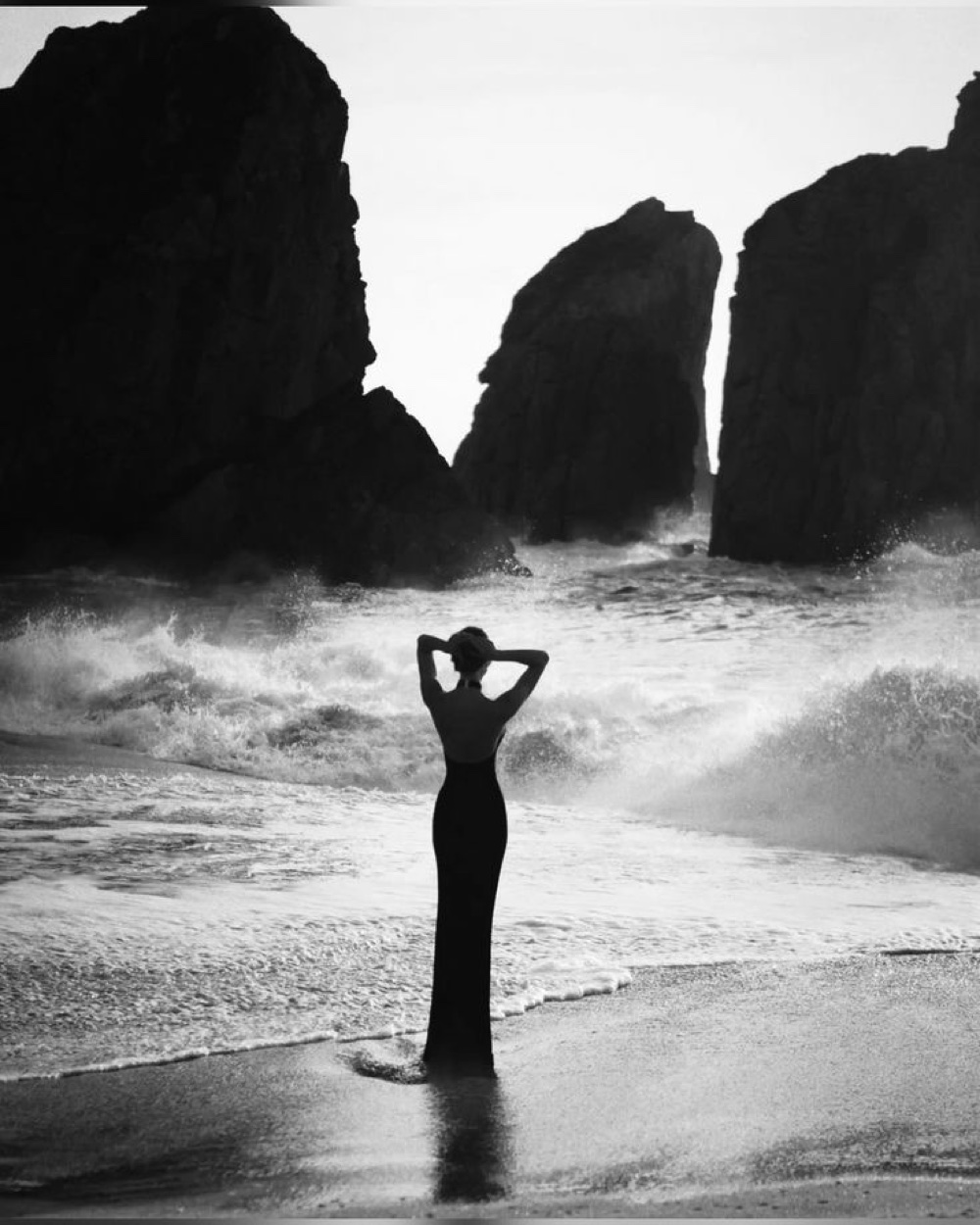
Build for Australian conditions
Resortwear is often presented as a permanent summer fantasy. An Australian coastal wardrobe has to be more realistic. It may need to handle strong sun, humidity, an afternoon shower, air conditioning and a cooler evening within the same day.
Bureau of Meteorology averages for Cape Byron illustrate the range. Mean maximum temperatures run from 28.1°C in January to 19.0°C in July. The station records mean annual rainfall of about 1,493 mm and an average of roughly 116 days each year with at least 1 mm of rain. That is an argument for breathable pieces, but also for an actual layer and footwear that can cope when the weather changes.
Start with jobs, not products
The most efficient capsule begins by naming the situations it must cover. For a coastal resort stay, those jobs commonly include swimming, sun-aware daytime dressing, walking into town, a casual lunch, a more polished dinner and a cooler or wet interval.
A piece earns its place when it performs one important job well and combines with several others. It does not need to be suitable for every activity.
The twelve-piece framework
1–2. Two swimsuits: one secure enough for active swimming and one style-led option for relaxing.
3. A breathable shirt: an easy layer over swimwear and a useful top with trousers or a skirt.
4. A simple fitted top: a clean base for daytime and evening combinations.
5. A fluid trouser: comfortable in motion and polished enough for dinner.
6. A skirt or relaxed short: chosen according to the wearer’s real habits.
7. A daytime dress: uncomplicated, breathable and compatible with a flat shoe.
8. An evening dress: comfortable for sitting and walking, with repeat-wear potential.
9. A sun-aware outer shirt or overshirt: selected for coverage as well as appearance.
10. A light warm or rain-ready layer: for air conditioning, wind and changing weather.
11. A walking sandal or flat: secure enough for the day’s actual distance.
12. A dressier shoe: sufficiently comfortable to remain useful through dinner and the walk home.
Why two swimsuits are not duplication
Our personal wardrobe guides make the reason clear. A plunging one-piece can be visually strong yet difficult to swim in. A bandeau bikini can be comfortable for relaxing while remaining less suitable for sustained movement. Trying to force either into the role of an active swimsuit weakens the capsule.
One secure swimming option and one style-led resort option can therefore be more functional than two visually similar designs. The distinction should be based on movement, coverage and intended activity.
Use the shirt as connective tissue
A breathable button-through shirt is one of the hardest-working resort pieces. Open over swimwear, it provides an easy transition away from the water. Buttoned or partially tucked, it works with the trouser, skirt or short. It can also become a light layer over a dress.
Breathability alone does not establish sun protection. Cancer Council Australia advises that greater skin coverage and tighter fabric structure improve protection, and notes that fabric stretch and moisture can reduce it. If sun protection is part of the shirt’s job, look for tested UPF information or evaluate coverage and fabric structure rather than assuming every light shirt is equivalent.
Choose one fitted top, not five nearly identical ones
The fitted top gives the capsule contrast against relaxed bottoms and layers cleanly beneath the shirt or outer piece. Its neckline should work with the intended jewellery and undergarments. Its length should match the rise of both bottoms.
Before adding another top, ask whether it creates a genuinely different outfit or merely repeats the same role in a slightly different shade.
Make the trouser earn day and evening
A fluid trouser should be comfortable in heat, opaque in changing light and easy to pair with both the fitted top and shirt. Check the hem against both pairs of shoes. A trouser that works with only one heel height introduces unnecessary dependence.
Light colours suit many resort palettes but require an honest transparency check. Look in natural light and examine pocket and undergarment lines before relying on the piece for travel.
Choose the second bottom by behaviour
A capsule does not automatically require shorts. If the wearer consistently reaches for skirts, a skirt is the more rational choice. If the holiday includes cycling, long walks or active days, a relaxed short may perform better.
The important criterion is not a standard packing list. It is whether the piece reflects what the wearer will actually do.
Give the two dresses different jobs
The day dress should tolerate movement, a flat shoe and a practical layer. The evening dress should remain comfortable while sitting and walking, and it should work with the dressier shoe and light layer.
They should not be distinguished only by colour. Difference in structure, length, fabric behaviour or level of formality gives each dress a clearer reason to be included.
Sun-aware clothing belongs in the wardrobe plan
ARPANSA recommends sun protection when the UV Index reaches 3 or above and advises combining protective clothing with a hat, sunglasses, sunscreen and shade. Clothing protects only the skin it covers. A resort capsule should therefore leave space for practical sun protection rather than treating it as separate from style.
For a garment marketed with a UPF rating, the Australian and New Zealand standard uses classifications of 15, 30, 50 and 50+. Fit and condition still matter: stretching, wetness and wear can change how a fabric performs.
Use a controlled palette, not a colourless one
A working palette usually needs one base, one supporting neutral and one controlled colour family. For example: black, cream and warm pink; chocolate, white and soft metallic; or navy, sand and rust.
Print can enter the capsule, but it should connect to at least two existing pieces. If a print requires its own shoe, bag and layer, it behaves more like a separate outfit than part of a capsule.
Run the combination test
Lay out all twelve pieces and build complete outfits, including shoes and layers. Do not count theoretical combinations that you would never wear. The aim is not the highest mathematical number; it is enough credible outfits for the planned days and settings.
- Each top should work with both bottoms.
- Each dress should work with at least one flat and one layer.
- The trouser hem should suit the shoes intended for it.
- At least one swim option should support genuine movement.
- At least one layer should address cooler or wet conditions.
- Sun protection should be planned rather than improvised.
- Every piece should have at least two realistic uses.
What not to include
Leave out uncomfortable “just in case” shoes, pieces requiring special undergarments you are not taking, untested pale fabrics, and items that need a completely separate accessory story. A capsule becomes clearer through subtraction.
Also leave room for ordinary necessities. A broad-brimmed hat, sunglasses, sunscreen, undergarments and a practical bag may sit outside the twelve-piece clothing framework, but they are not optional details of an Australian coastal day.
The conclusion
An Australian resortwear capsule should be compact without being naive about the environment. Twelve well-defined pieces can cover swimming, town, lunch and evening when they include real movement, sun, rain and temperature changes in the plan.
The strongest capsule is not the one where every item looks identical. It is the one where each piece has a clear job, works with its neighbours and reflects the wearer’s actual behaviour.